English
 Français
 Pусский
 Español
 Português
 ไทย
ไทย العربية
 िन्दी
िन्दी Indonesia
Custom Solutions For Track Maintance

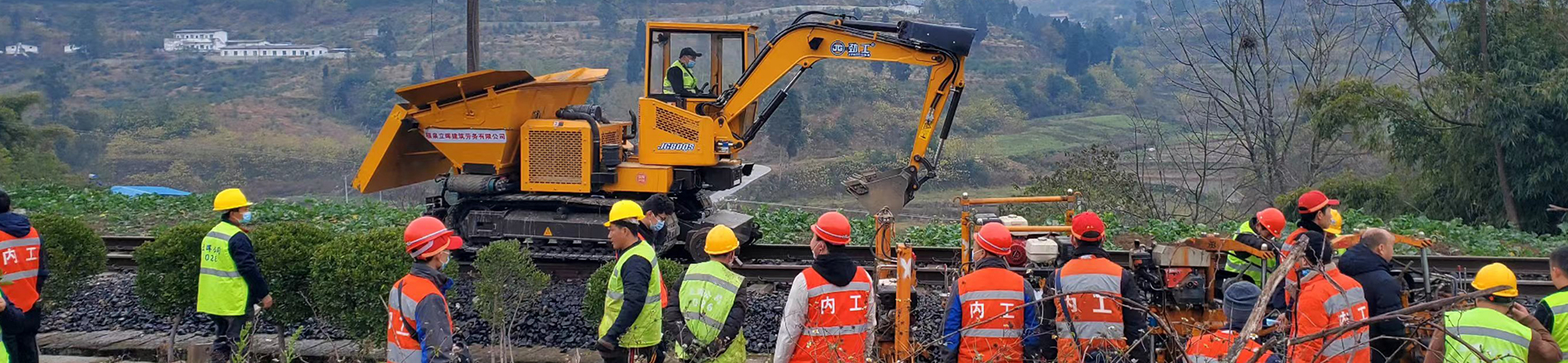
Many railway contractors look for cost-saving shortcuts when sourcing hi-rail equipment. A large number of suppliers offer after-market refit solutions: mounting rail wheels and railway attachments onto standard wheel excavators. At first glance, these modified units carry attractive price tags. However, most refit kits only add external hardware without re-calibrating the whole machine structure, hydraulic circuit and safety logic. Once failures happen during tight-schedule maintenance-window operations, they may trigger track blockage, derailment risk and costly project losses.
Factory-integrated rail-special machinery goes far beyond simple part assembly. Every chassis, hydraulic component and safety mechanism is engineered from the ground up for track-running scenarios. This article unpacks typical hazards of retrofitted hi-rail excavators and introduces JINGGONG’s factory-built railway-special machine portfolio.
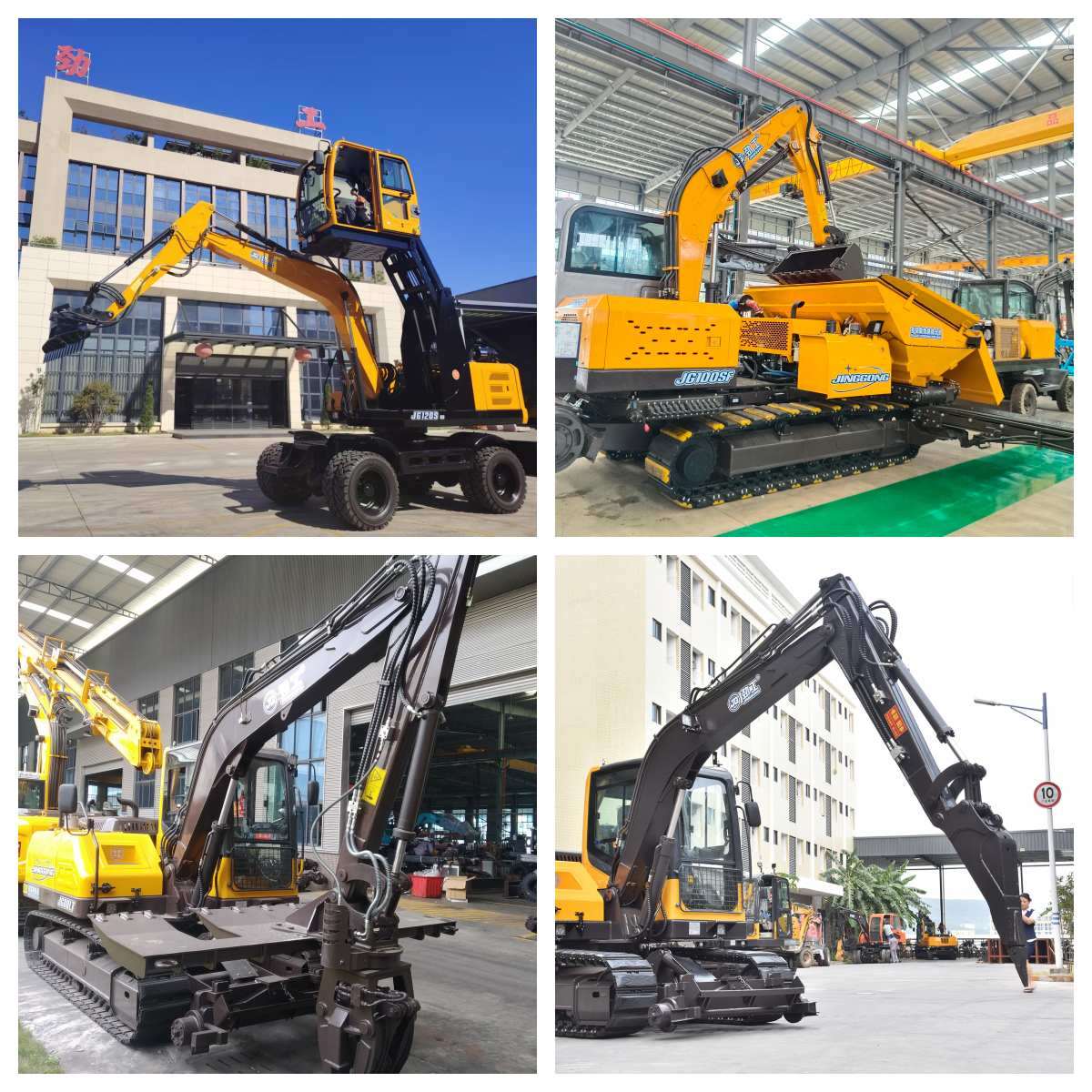
Retrofitted railway excavators have four recurring weak points that cannot be ignored for track-side heavy-duty work.
First is insufficient chassis reinforcement. Ordinary excavator frames are not designed to bear repeated impact from rail-wheel loads. Refit workshops simply bolt rail gear to existing frames, which leads to frame deformation, welding crack and accelerated component wear after long-term on-track travelling.
Second comes mismatched hydraulic system configuration. Many aftermarket kits add railway attachments without adjusting main pump output, flow distribution and pressure setting. When running sleeper-changing grabs, ballast undercutters or screening buckets, inadequate hydraulic output causes slow action, overheating and short service life of attachments.
Third, incomplete safety protection. Most low-cost refits omit critical hardware: independent rail-wheel driving unit, anti-derailment limit structure, overload protection and travel warning alarm. There is no built-in rescue emergency assistance system for sudden breakdowns on live tracks.
Fourth, non-standard spare-parts compatibility. Refitted assemblies adopt custom-made non-universal parts. When components break overseas, contractors face long downtime while waiting for tailor-made replacements.
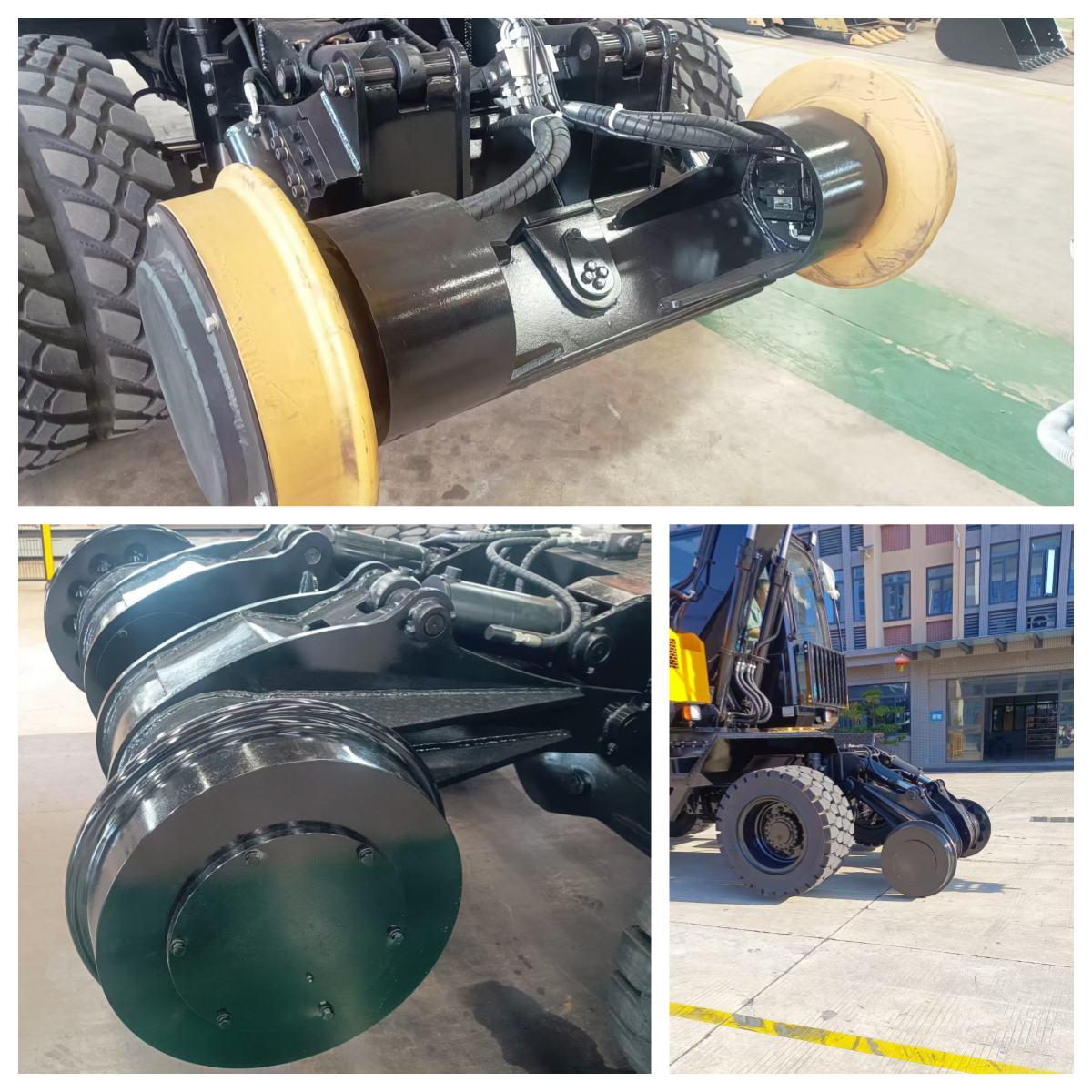
JINGGONG railway-special machines complete all structural reinforcement, hydraulic matching and safety validation at factory stage, rather than modifying finished general-purpose excavators.
· Reinforced whole chassis: Frame, axle and counterweight are optimised for frequent on-track travelling and impact load.
· Pre-calibrated hydraulic circuits: Hydraulic flow and pressure are preset for railway attachments including sleeper changer, ballast undercutter and screening bucket. Users can install working tools directly without field re-adjustment.
· Complete safety suite: Equipped with independent-drive rail-wheel assemblies, anti-derailment limit devices, overload protection and sound-light warning. Optional rescue emergency assistance system handles sudden malfunctions on the track.
· Custom-adaptable rail gauge: Rail-wheel assemblies can be manufactured for different local track gauge requirements before delivery.
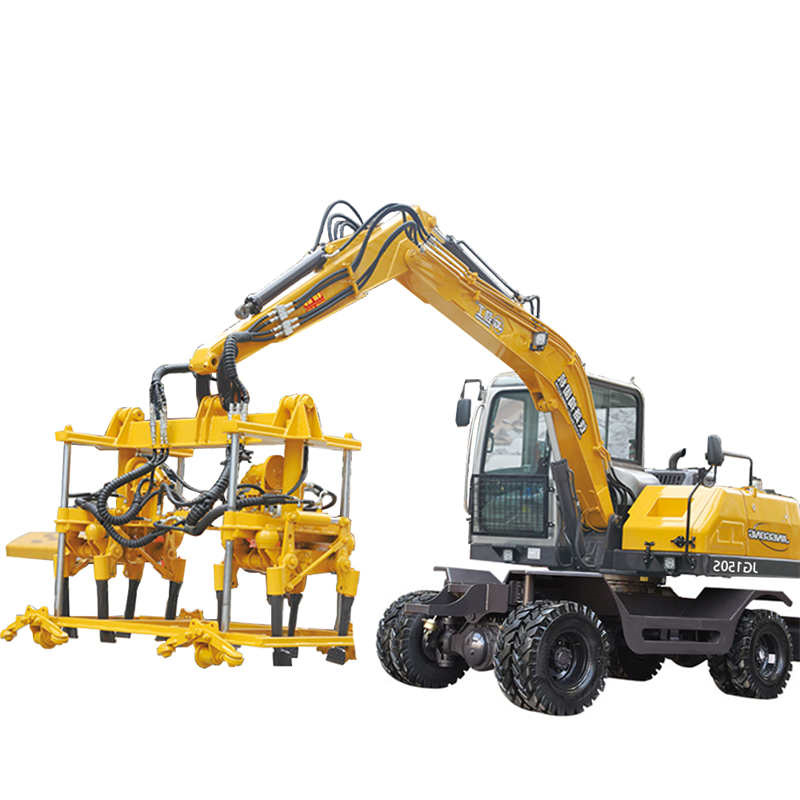
Our product portfolio covers diversified track-maintenance tasks. JG80ST and JG150ST focus on sleeper-replacement work; JG150LT targets ballast under-cutting operations; JG100SF is built for ballast screening and track-bed tidying. Buyers can select proper models according to line conditions and daily-work content.
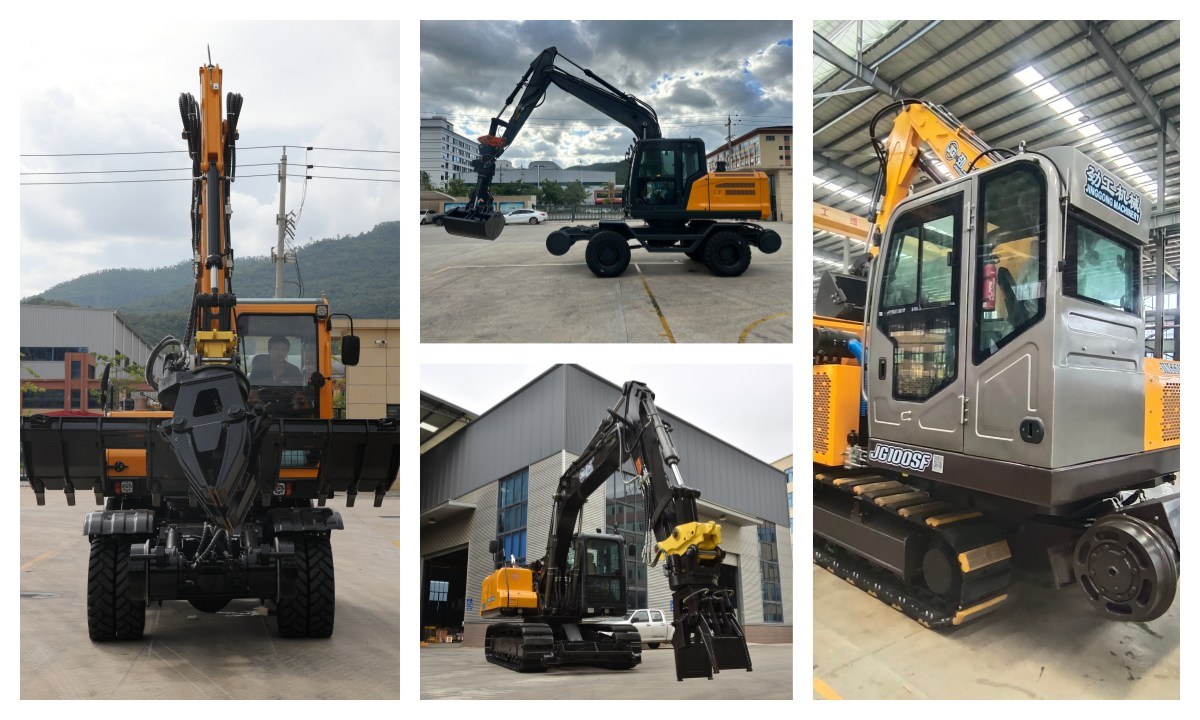
When you evaluate potential suppliers, you can judge through several practical dimensions.
1. Check whether chassis and axle are originally designed for railway operating load, not secondary welding modification.
2. Confirm whether hydraulic parameters are factory-preset for railway attachments, instead of simple external piping.
3. Verify the completeness of safety devices and whether emergency rescue function is available.
4. Confirm spare-part supply logic: whether rail-wheel components adopt universal-specification parts or one-off custom-fabricated pieces.
Low upfront cost from retrofitted machines often transfers huge operational risks to construction sites. For railway projects, stable running performance counts more than initial purchase price.
Q: Can after-market refitted hi-rail excavators be exported for overseas railway projects?
A: There is no unified answer for different regional standards. Most retrofitted equipment lacks whole-machine system-level verification. They may fail local safety inspection and bring hidden risks during maintenance-window construction.
Q: Can JINGGONG adjust rail-wheel assemblies for non-standard track gauges?
A: Yes. Rail-wheel systems are custom-produced before shipment according to customer-provided track-gauge data. On-site quick modification for different gauges is not supported.
Q: Is the rescue emergency assistance system standard configuration?
A: It is an optional add-on module. It is highly recommended for contractors working on busy operating railway lines.
Q: Can factory-integrated rail-special machines also work for ordinary earth-moving tasks off-track?
A: Yes. When rail wheels are lifted, these machines can carry out regular digging, loading and material-handling work on common construction sites, improving overall equipment utilisation rate.
Railway-track maintenance is a high-risk, time-sensitive industry. Cutting investment by adopting after-market refitted hi-rail excavators may create severe hidden hazards for your projects.
Factory-integrated rail-special machinery completes chassis strengthening, hydraulic matching and safety verification in production phase. JINGGONG’s model matrix from JG80ST, JG150ST, JG150LT to JG100SF delivers tailored solutions for sleeper replacement, ballast under-cutting and screening tasks.
When assessing railway equipment, look beyond the surface price. Focus on whole-machine reliability, complete safety configuration and global spare-part supply capacity.
If you have track-gauge information and project-task descriptions, please feel free to contact us for targeted equipment recommendations.