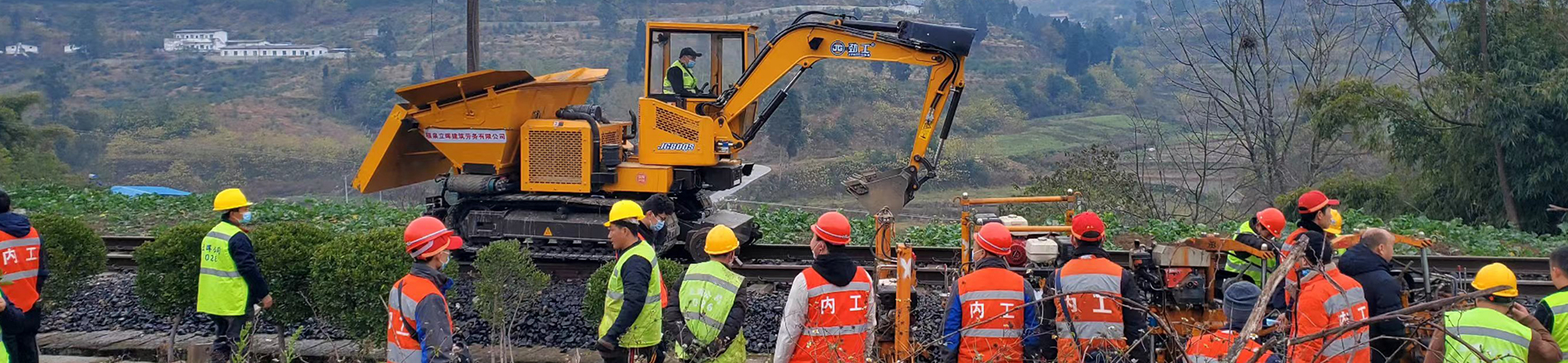
Many global railway contractors struggle with a core selection question: Which is better, single-head or double-head tamping machine?
The two devices complete the same ballast compaction function but differ drastically in working logic, cycle efficiency, and construction adaptability.
Single-Head Tamping Machine
Asingle-head tamping unit only tampers one side of the sleeper per working cycle. It requires repeated forward-and-back operation to finish full sleeper compaction.
Applicable scenarios: Small-scale track repair, sporadic defect handling, low-frequency maintenance projects where efficiency is not the core requirement.
Main disadvantages: Long working cycles, uneven compaction density, low daily construction output, not suitable for time-sensitive window maintenance.
Double-Head Tamping Machine (Dual-Head Tamping Equipment)
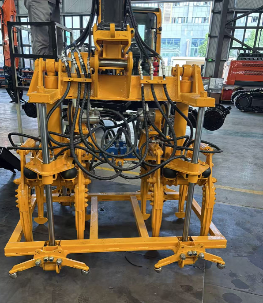
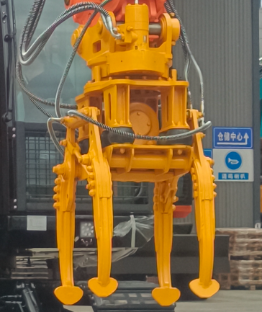
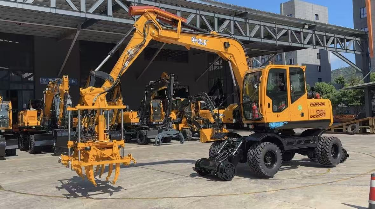
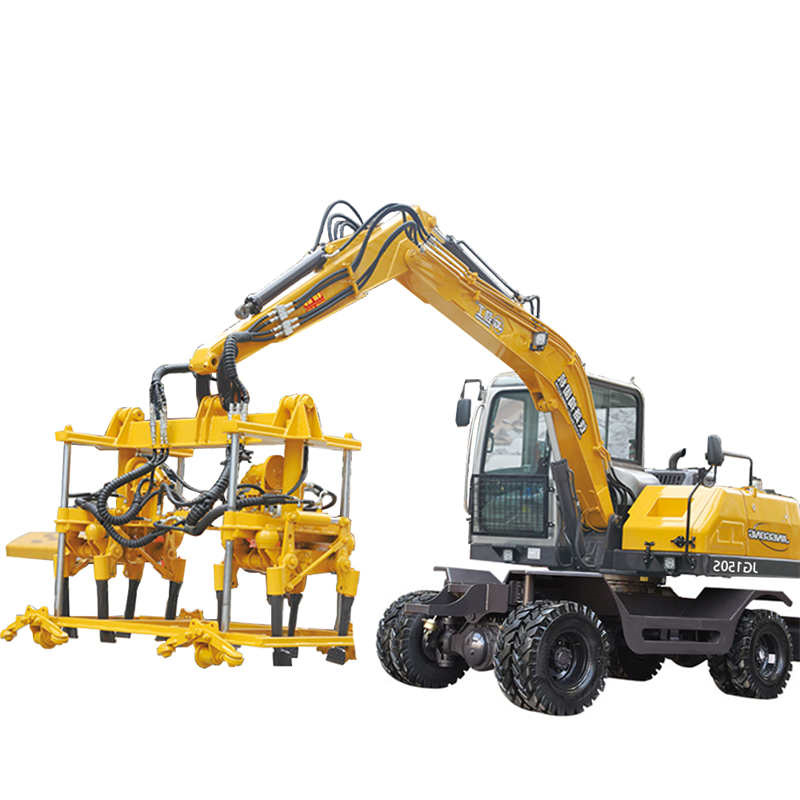
A double-head tamping machine adopts bilateral synchronous tamping structure, compacting ballast on both sides of the sleeper simultaneously in one single cycle.
Compared with single-head equipment, double-head tamping delivers comprehensive upgrades:
- 50%+ higher overall working efficiency
- Fewer repeated working cycles
- More uniform ballast compaction density
- Shorter track occupation time
- Higher daily maintenance throughput
For railway projects with strictmaintenance window limits, double-head tamping equipment is the most cost-effective solution to improve construction efficiency and reduce line shutdown losses.
Core Advantages of Double-Head Tamping Machines in Modern Railway Maintenance
1. Strictly Adapt to Limited Railway Possession Windows
Mainline railways, urban rail transit, and station tracks only allow extremely short maintenance time at night or during gaps. Double-head tamping completes standardized compaction in fewer cycles, ensuring tracks return to normal operation on schedule.
2. Higher Compaction Consistency & Construction Quality
Synchronous bilateral tamping avoids one-sided compaction deviation caused by repeated single-head operation. Uniformballast density maintains stable track geometry for a longer period, reducing maintenance frequency.
3. Lower Comprehensive Operating Cost
High efficiency means fewer working hours, less equipment fuel consumption, reduced labor input, and fewer secondary repairs. In long-term railway operation, double-head tamping effectively lowers overall infrastructure maintenance budgets.
4. Strong On-Site Mobility & Flexibility
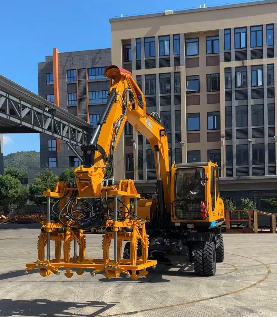
Compact double-head tamping machines abandon the bulky design of large tamping trains. They feature flexible walking, convenient deployment, and no need for large-scale auxiliary equipment, perfectly adapting to scattered local repair works.
Best Application Scenarios for Double-Head Tamping Equipment
Double-head tamping technology is not limited to general railway maintenance. It shows unique advantages in high-precision and time-sensitive scenarios:
Railway Turnouts & Switches
Turnout areas have complex track structures, frequent stress changes, and high precision requirements. As the weakest link of railway lines, turnouts require uniform and dense ballast support. Double-head synchronous tamping effectively stabilizes turnout geometry and guarantees switching accuracy and driving safety.
Station & Terminal Tracks
Station tracks have dense traffic flow and extremely tight maintenance windows. Efficientdouble-head tamping minimizes shutdown time and ensures continuous railway transportation capacity.
Regional Railways & Industrial Rail Lines
Mining railways, factory dedicated lines, and regional branch lines feature scattered faults and frequent small-scale maintenance. Compact double-head tamping machines support rapid transfer and on-demand repair, ideal for industrial rail daily maintenance.
New Track Paving & Track Renovation Projects
In new line ballast leveling and old track renovation, double-head tamping improves overall construction progress and ensures consistent overall track foundation quality.
Wide Compatibility With Diverse Railway Specifications
Modern compact double-head tamping machines support multi-scene universal adaptation, matching mainstream global railway standards:
Multiple Sleeper Types
- Concrete sleepers
- Wooden sleepers
- Steel sleepers
Various Rail Gauges
- Standard gauge (1435mm)
- Narrow gauge
- Mining dedicated gauge
- Industrial railway custom gauge
One device adapts to multiple line types, greatly improving equipment utilization rate for railway engineering companies.
Equipment Maintenance & Long-Term Operational Stability
Tamping pick teeth, hydraulic systems, andvibration components are core wearable parts of tamping equipment.
Optimized double-head tamping machine structural design realizes quick replacement of tamping picks, greatly reducing on-site downtime. Regular inspection ofhydraulic circuits, vibration systems, and wearing parts ensures long-term stable equipment performance and extends service life.
Why Compact Double-Head Tamping Is The Trend For 2026 Railway Maintenance
Large integrated tamping trains are suitable only for large-scale line renewal. For daily fault repair, sleeper replacement, partial ballast reinforcement, and turnout maintenance, large equipment has high costs and poor flexibility.
Compact double-head tamping machines perfectly balance efficiency, mobility, and cost:
- High efficiency close to large tamping equipment
- Flexibility of small engineering machinery
- Low fuel consumption and low maintenance cost
- Zero large-scale deployment barriers
Facing rising global labor costs and stricter railway operation schedules, compact dual-head tamping equipment has become the mainstream preferred solution forrailway contractors, infrastructure bureaus, and industrial rail enterprises.
Conclusion
Ballast tamping is an indispensable core process for ensuring railway safety, stability, and long service life.
Compared with traditional single-head tamping machines, double-head tamping equipment provides higher efficiency, more uniform compaction quality, and lower time cost, perfectly adapting to modern railway limited-window maintenance, turnout precision repair, and industrial rail daily maintenance.
For railway engineering teams pursuing highproductivity and low comprehensive maintenance costs, upgrading to double-head tamping technology is the most practical and high-return optimization solution.
 English
 Français
 Pусский
 Español
 Português
 ไทย
ไทย العربية
 िन्दी
िन्दी Indonesia